Your Rights as a Tenant in Nigeria: A Complete Guide

October 28, 2026
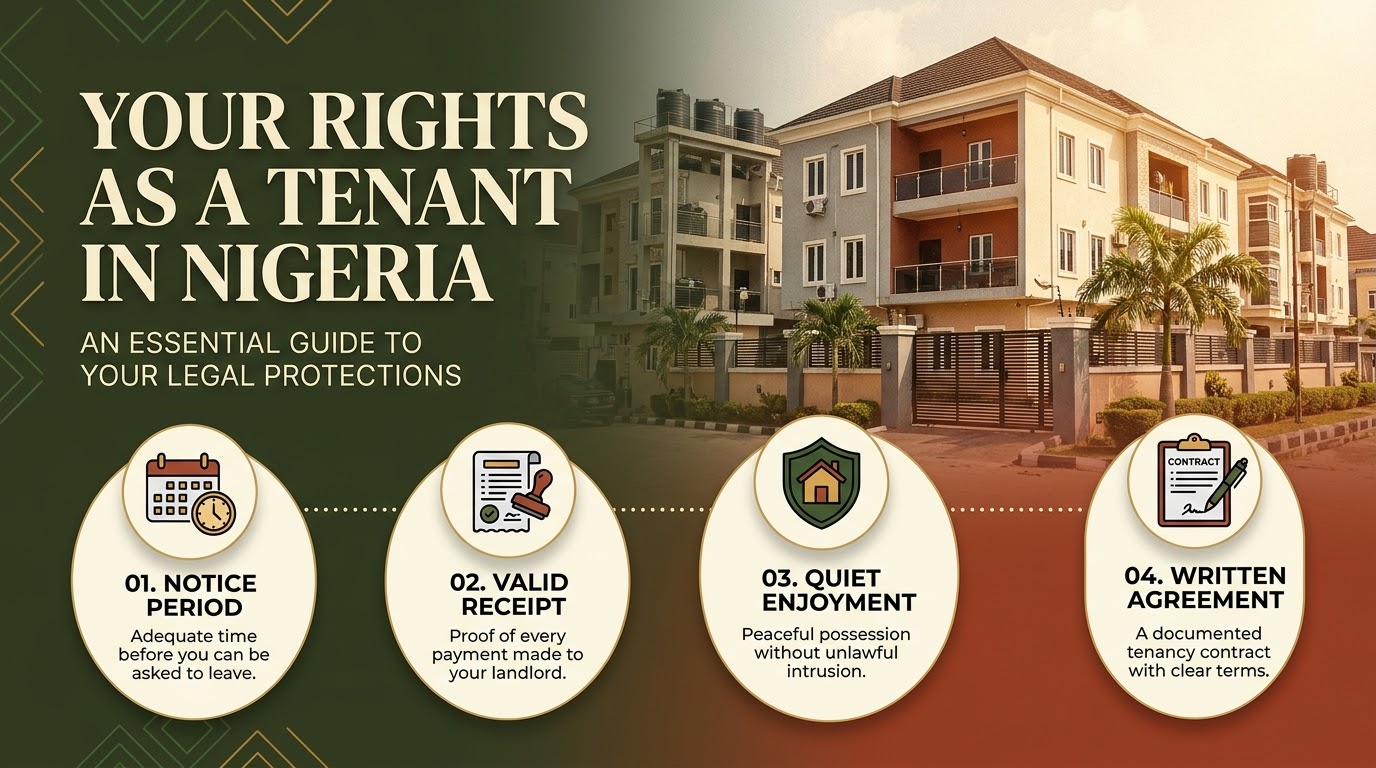
Understanding your legal rights and responsibilities as a tenant can help you navigate rental agreements with confidence.
**1. The Right to Peaceful Enjoyment of Your Property**
Tenants are generally entitled to occupy and enjoy their rented property without unnecessary interference from their landlords. Landlords should respect tenants' privacy and follow applicable legal procedures when seeking access to the property.
**2. The Right to Proper Notice Before Eviction**
A landlord cannot lawfully evict a tenant simply by changing the locks or removing belongings without following the applicable legal process. The required notice depends on the tenancy agreement, the type of tenancy, and the relevant state law. Where a tenant refuses to leave, a court order may be required to recover possession.
**3. The Right to a Clear Tenancy Agreement**
A tenancy agreement should clearly state the rent payable, duration of the tenancy, payment terms, responsibilities for repairs, and conditions for terminating the agreement. Tenants should read and retain a copy of the agreement before making commitments.
**4. The Right to Fair Treatment and Proper Maintenance**
Tenants should understand which repairs are the landlord's responsibility and which obligations fall on them under the agreement and applicable law. Structural defects and major building issues should be reported promptly, while tenants should take reasonable care of the property.
**5. The Right to Rent Transparency and Receipts**
Tenants should request clear documentation of rent payments, deposits, and other agreed charges. Applicable state laws may also regulate advance rent demands, fees, and other tenancy practices.
**6. The Right to Challenge Unlawful Actions**
If a landlord threatens an unlawful eviction, unlawfully interferes with possession, or fails to respect applicable tenancy protections, tenants may seek assistance from a lawyer, the relevant housing authority, or a legal aid organisation.
### Know Your Responsibilities Too
Tenant rights come with responsibilities. Pay rent as agreed, comply with reasonable tenancy terms, maintain the property appropriately, and communicate maintenance concerns promptly. Keeping records of payments, correspondence, and repair requests can also help prevent disputes.
### Understanding the Law in Your State
Tenancy laws differ across Nigeria. For example, Lagos State has its own tenancy legislation, while other states operate under their respective laws and legal frameworks. The applicable rules may depend on the property's location and the type of tenancy.
**Ultimately, knowing your rights is one of the best ways to protect yourself as a tenant.** A clear agreement, honest communication, proper documentation, and respect for the law can help create a fairer relationship between landlords and tenants.
An informed tenant is better equipped to protect their home, while a responsible landlord builds trust and long-term value through professional property management.